End-of-Hurricane-Season Home Maintenance Checklist for Naples Homeowners
Quick answer: Atlantic hurricane season officially ends on November 30. Once it’s over, Naples and Southwest Florida homeowners should check the roof, gutters, windows, doors, screens, exterior walls, pavers, and drainage for damage the season left behind. Fix small problems now, during the drier winter months, so they don’t turn into big repairs before next season starts on June 1.
Even if no named storm came through your neighborhood, months of heavy rain, high humidity, and strong summer winds still wear a home down. Winter in Southwest Florida is dry and mild, which makes it the best time of year for repairs, painting, and exterior projects. This checklist explains what to look at and why it matters.
Key Takeaways
- Hurricane season runs June 1 through November 30. Winter is the best window for repairs in Naples.
- Start on the outside: roof, gutters, soffits, siding, stucco, and paint.
- Test every exterior door, window, and screen for leaks, sticking, and damaged seals.
- Look inside for hidden water damage: stains on drywall or ceilings, soft baseboards, or a musty smell.
- Take photos of your home’s condition for your records and insurance.
- Make a list of what needs fixing and get it done before the rainy season comes back.
Why Maintenance After Hurricane Season Matters in Southwest Florida
Damage in Naples, Marco Island, and Estero doesn’t always come from one big storm. Most of it builds up slowly over the summer:
- Wind-driven rain pushes water past worn caulk and weatherstripping.
- High humidity speeds up mold, wood rot, and peeling paint.
- Heavy downpours overload gutters and wash out soil around pavers and foundations.
- Salt air near the coast corrodes hardware, hinges, and fasteners.
Catching these problems early keeps repairs smaller, protects your home’s value, and gets your house ready for next season.
The End-of-Hurricane-Season Home Maintenance Checklist
1. Roof and Attic
- From the ground, check for missing, lifted, or cracked shingles or tiles.
- Look for damaged flashing around vents, chimneys, and skylights.
- Check the attic for water stains, damp insulation, or daylight coming through.
- Have a professional roof inspection done if your roof is older or took strong winds this season.
Why it matters: A small roof leak can go unnoticed for months while it damages insulation, drywall, and framing.
2. Gutters and Downspouts
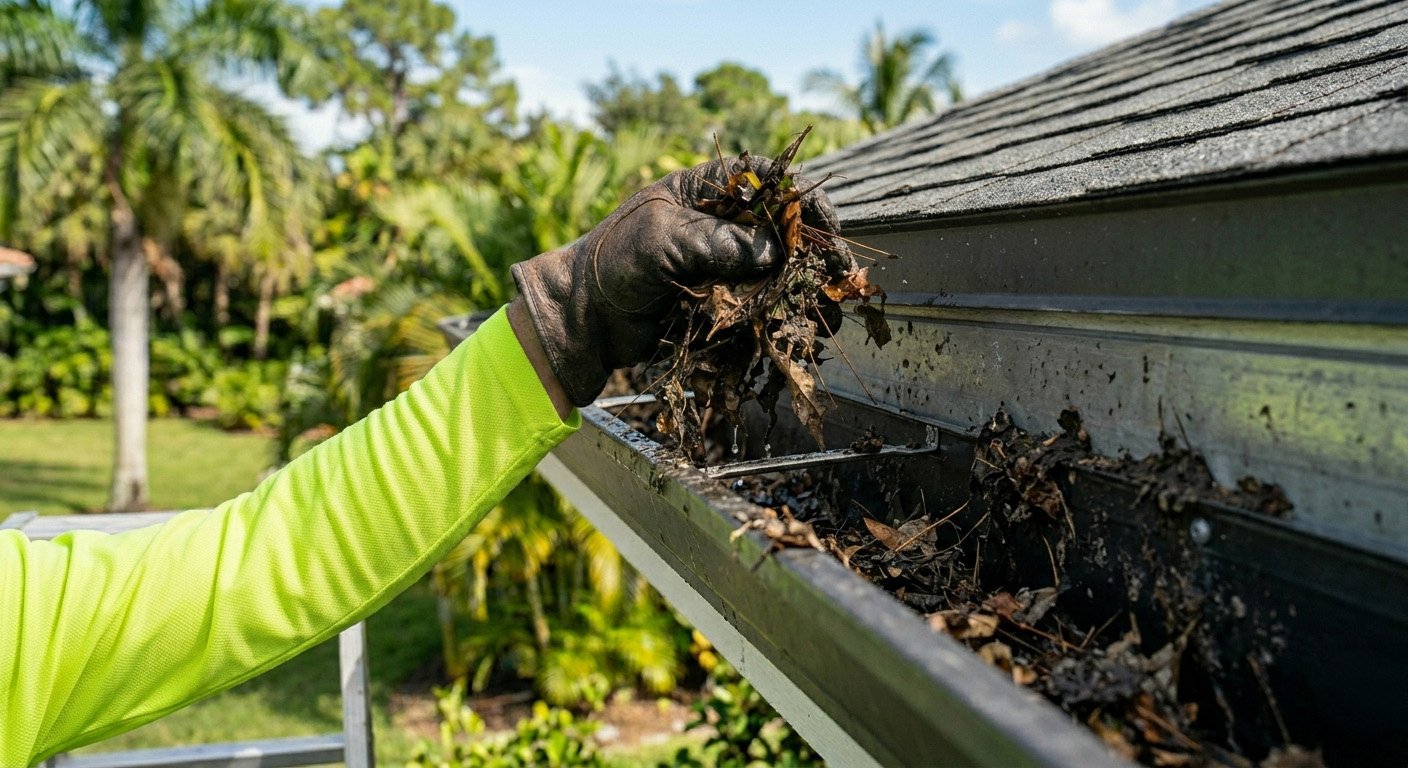
- Clear out leaves, palm debris, and buildup.
- Make sure the gutters are firmly attached and not pulling away from the fascia.
- Confirm the downspouts send water at least a few feet away from the foundation.
- Look for sagging sections or leaking seams.
Why it matters: Clogged gutters overflow and send water toward your fascia, soffits, and foundation, which is one of the most common causes of rot in Florida homes.
3. Soffits, Fascia, and Exterior Trim
- Check for loose, cracked, or missing soffit panels.
- Press on the fascia boards and trim to find soft or rotted wood.
- Look for gaps where pests or water could get in.
4. Exterior Walls, Stucco, and Paint
- Look for cracks in the stucco, especially around windows and doors.
- Check for peeling, bubbling, or chalky paint.
- Look for mildew or dark staining on shaded walls.
- Re-caulk gaps around exterior fixtures, outlets, and hose bibs.
Why it matters: Exterior paint and caulk are your home’s first barrier against moisture. Winter’s low humidity also makes it the best season for exterior painting in Naples.
5. Windows and Window Screens
- Look for water stains or bubbling paint under window sills inside the house.
- Check the caulk and seals around each window frame.
- Open and close every window to make sure it operates and locks properly.
- Repair torn, loose, or bent screens.
6. Exterior Doors, Sliders, and Garage Doors
- Look for daylight or drafts around door frames.
- Replace worn weatherstripping and door sweeps.
- Check that doors open, close, and latch without sticking. Swelling can mean moisture got into the frame.
- Clean sliding door tracks and check the screen doors.
- Tighten or replace corroded handles, hinges, and lock hardware.
Why it matters: Doors and sliders let in a lot of wind-driven rain. A door that sticks after a wet summer often has water damage in the frame or threshold.
7. Hurricane Shutters and Storm Protection
- Clean the shutters and panels before you store them.
- Check tracks, anchors, and fasteners for rust or damage.
- Label panels by window so installation goes faster next season.
- Replace any missing hardware now, while it’s easy to find.
8. Interior Water Damage Check
- Look over the ceilings and walls for stains, cracks, or bubbling.
- Check the baseboards for swelling or soft spots, especially near exterior doors.
- Notice any musty smells in closets, bathrooms, and corners.
- Look under sinks and around windows for signs of leaks.
Why it matters: Water that got in during summer storms often shows up weeks later as a drywall stain or warped trim. Fixing it now helps keep mold from spreading.
9. Pavers, Driveways, and Walkways
- Look for sunken, shifted, or uneven pavers.
- Check for washed-out joint sand and weeds growing between pavers.
- Find low spots where water pools after rain.
Why it matters: Heavy summer rain washes out the base under pavers, which leads to settling and tripping hazards.
10. Yard, Drainage, and Landscaping
- Trim tree limbs and palm fronds that hang over the roof.
- Remove dead or storm-damaged branches.
- Make sure the ground slopes away from the foundation.
- Check that the irrigation isn’t spraying onto walls or soaking the foundation.
11. Lanai, Pool Cage, and Outdoor Living Areas
- Check lanai screens for tears or loose spline.
- Look for loose or corroded fasteners on the pool cage.
- Check outdoor ceiling fans and light fixtures for corrosion.
- Look at decking, railings, and outdoor kitchens for wear.
12. Generator and Emergency Supplies
- Service your generator and test-run it following the manufacturer’s instructions.
- Use up or rotate stored fuel safely.
- Restock flashlights, batteries, and first aid supplies.
- Check expiration dates on stored water and food.
13. Insurance and Home Records
- Take dated photos and video of your home’s exterior and interior.
- Save receipts for any repairs or upgrades made this year.
- Review your homeowners policy before it renews.
- Ask your insurance agent whether a wind mitigation inspection could lower your premium.
When to Call a Professional
You can handle a lot of this checklist yourself. Call a pro if you find:
- Soft or rotted wood in fascia, door frames, or trim
- Water stains or damaged drywall inside the home
- Doors or windows that leak, stick, or won’t latch
- Stucco cracks wider than a hairline
- Sunken or shifted pavers
- Damaged screens on lanais, pool cages, or doors
The Zagorodniy Handyman & Remodeling team handles drywall repair and texture matching, interior and exterior painting, door and screen repair, gutter cleaning, paver work, trim and moulding, and full remodels across Naples, North Naples, Marco Island, and Estero.
Frequently Asked Questions
When does hurricane season end in Florida?
Atlantic hurricane season officially ends on November 30 each year and starts again on June 1. Storms can still form outside those dates, but it’s rare.
What should I check on my house after hurricane season?
Check the roof, gutters, soffits and fascia, exterior walls and paint, windows, doors, screens, shutters, pavers, and drainage. Inside, look for water stains on ceilings and walls, swollen baseboards, and musty smells.
What is the best time of year for home repairs in Naples, FL?
Winter, roughly December through April, is the best time for most home repairs in Naples. Lower humidity and less rain make it ideal for exterior painting, caulking, paver work, and other outdoor projects.
How do I know if my home has hidden water damage?
Common signs include discolored or bubbling drywall, peeling paint near windows, soft or swollen baseboards, doors that stick, and a musty smell. If you see any of these, have the area inspected before mold or rot spreads.
Should I clean my gutters after hurricane season?
Yes. Summer storms fill gutters with leaves, palm debris, and grit. Cleaning them after the season helps prevent overflow, fascia rot, and water pooling around your foundation.
How do I store hurricane shutters properly?
Clean them, check the tracks and hardware for rust, label each panel by window, and store them in a dry place. Replace any missing fasteners now so you’re ready next June.
Can I do exterior painting in Naples during winter?
Yes. Winter is the best season for exterior painting in Southwest Florida because the lower humidity and drier weather help paint cure properly.
Get Your Naples Home Ready for Next Season
Hurricane season may be over, but the next one starts June 1. Winter is the best time to fix what this season left behind. For drywall, doors, screens, paint, pavers, gutters, or a bigger remodel, the team at Zagorodniy Handyman & Remodeling is here to help homeowners in Naples and the surrounding areas.
📞 Call (239) 296-2367
✉️ Contact@ZHRNaples.com
🌐 Request an estimate at zhrnaples.com
Quality Workmanship. Local Roots.